
What Merchant One Brings to Credit Card Processing
Most credit card processors don't advertise approval rates. Merchant One does, and at 98%, it's among the highest you'll find. That accessibility comes with a tradeoff worth understanding before you apply: pricing is entirely quote-based, contracts typically run three years, and the fees disclosed in your agreement may differ from what you expected during the sales conversation. Founded in 2002 in Miami Beach, Florida, and acquired by Fiserv for approximately $300 million in December 2022, Merchant One now operates with Fortune 500 payment infrastructure behind it while maintaining its own sales and support teams. The company serves more than 100,000 merchants across the United States. We score Merchant One 6.6 out of 10 for the credit card processing category, reflecting strong onboarding speed and support availability alongside notable gaps in pricing transparency.
Merchant One functions as an independent sales organization (ISO) that resells Fiserv's processing infrastructure. Your transactions are routed through the same network used by some of the largest processors globally, but your account relationship and daily support come through Merchant One's team directly.
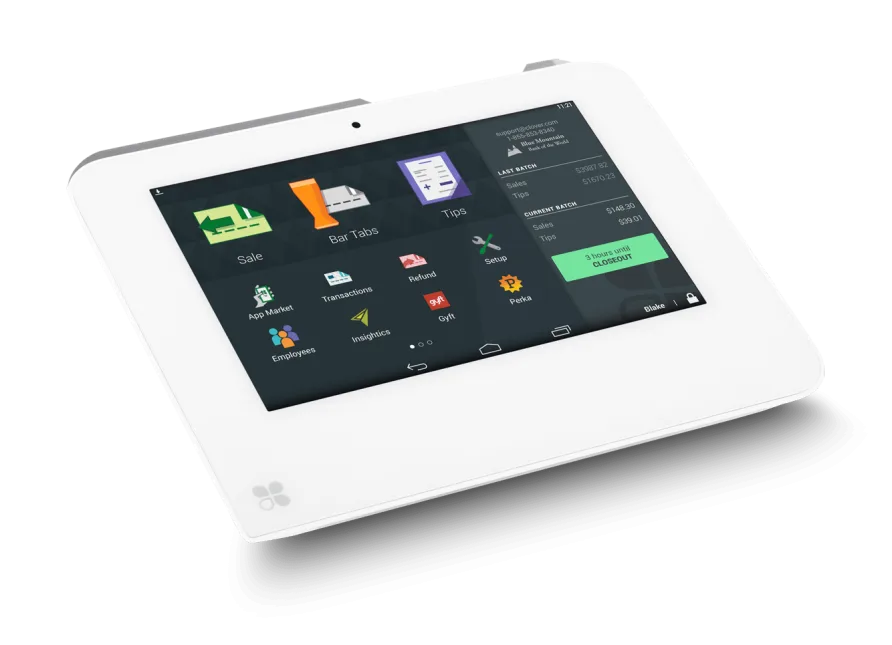
The processing covers the full range of payment types you'd expect. In-person transactions run through Clover POS hardware or a selection of basic terminals currently advertised through the company's terminal placement program, including models like the Pax S80, FD-130, and Verifone VX-520 (availability and specific terms may vary by merchant). Each supports EMV chip and contactless payments. If your operation needs more advanced POS capabilities, Merchant One resells the full Clover lineup: the Clover Station for countertop setups, Clover Mini for space-constrained counters, Clover Flex for tableside or mobile use, and Clover Go for processing on a smartphone.
Online sellers get a payment gateway compatible with over 175 shopping cart platforms, covering most major e-commerce environments. The virtual terminal allows phone and mail-order businesses to key in card numbers through a web browser, and the built-in customer vault stores card details for recurring billing. Gift and loyalty card programs are integrated into the platform, along with a text message marketing tool, and these are features that many small processors don't include at the base tier.
Merchant One doesn't offer a dedicated mobile app for account management or transaction processing under its own brand. Mobile acceptance is handled through Clover hardware and the Clover app rather than a Merchant One-branded experience.
Merchant One Pricing: What You'll Actually Pay
The biggest question mark with Merchant One is cost, and that's by design. The company doesn't publish its rates online. To get a quote, you'll need to speak with an account representative, a process that gives Merchant One flexibility to tailor pricing to each merchant's volume and risk profile but makes comparison shopping difficult before you pick up the phone.
What we can confirm: Merchant One uses interchange-plus pricing, which is generally the most transparent model in payment processing. Published ranges show card-present transaction markups from 0.29% to 1.55% above interchange, and card-not-present markups from 0.29% to 1.99%. The monthly account fee sits at $13.95. No setup fee is charged, though equipment programs and other onboarding terms may still carry costs depending on your agreement.
The trouble is in the range itself. A markup of 0.29% above interchange is competitive, even aggressive, for a small merchant. A markup of 1.55% on swiped transactions is steep. Where your rate falls within that spectrum depends entirely on your negotiation with the sales team, your processing volume, and your business type. Those published ranges represent qualified rates; your actual effective rate will also include interchange fees, assessment fees, and any ancillary charges like PCI compliance, batch processing, statement fees, or monthly minimums that aren't captured in the markup alone.
Running the math on two scenarios illustrates the stakes, using markup-only costs to keep the comparison clean. A solo consultant processing $5,000 per month in keyed-in transactions at the midpoint markup of roughly 1.14% plus interchange (using an average interchange rate of 1.80%) would pay approximately $147 in processing fees plus the $13.95 monthly fee, totaling about $1,931 per year in those two line items alone. A retail shop processing $25,000 per month in swiped transactions at a more favorable negotiated markup of 0.50% plus average interchange of 1.70% would pay around $550 in monthly processing fees, or roughly $6,767 annually including the monthly fee. Actual total cost will be higher once ancillary fees are factored in.
The contract structure adds another layer. Merchant One's standard agreement is a three-year term with early termination fees if you cancel before it expires. A recurring theme among long-term merchants is surprise at fee structures that weren't fully explained during onboarding, including charges for PCI non-compliance, monthly minimums, and batch processing fees that didn't come up in initial conversations.
Getting Started and Daily Operations
Where Merchant One earns its strongest marks is the front door. The 98% approval rate isn't just marketing language; it reflects a willingness to work with merchants who might be declined elsewhere, including business owners with limited credit history or lower credit scores. For many small operators, that alone solves a real problem.
Setup speed matches the accessibility. Merchant One advertises same-day processing for many merchants, and the onboarding process is supported by a dedicated account manager assigned to each new account. That manager serves as a single point of contact for setup questions, equipment configuration, and early troubleshooting, a hands-on model that merchants consistently praise. Merchant One states next-day funding on all card types, though funding timelines can vary by program and merchant profile.
The day-to-day experience centers on whichever hardware and software stack you choose. The Clover POS interface is well-regarded for its clean layout and intuitive employee training curve, and it handles inventory, staff management, and sales reporting from a single screen. Merchant One's own virtual terminal is functional, though the transaction entry form surfaces address verification, tax, tip, invoice, and vault fields all in a single view. Staff members processing phone orders will adjust quickly, but that density can feel crowded on first use.
Reporting and analytics are available through the merchant dashboard, covering transaction summaries, recurring payment tracking, and invoice management. The tools cover basic financial oversight but don't produce the data visualizations or trend graphs that some modern platforms now include by default. For merchants who need deeper sales analytics, the Clover dashboard supplements Merchant One's own reporting with additional tools and third-party app integrations.
Who Should Consider Merchant One
Picture a local restaurant owner who's been turned down by two other processors because their personal credit score took a hit during a slow stretch three years ago. The kitchen is solid, the neighborhood foot traffic is growing, and they need to start accepting cards this week, not next month. Merchant One's approval process is built for exactly this situation: a fast yes, a terminal shipped the same day, and deposits hitting the bank account shortly after.
That speed-and-access combination also fits newer businesses without an established processing history, seasonal operations that need to spin up quickly, and trade show vendors who can't afford a two-week underwriting window. The Clover hardware ecosystem gives any of these businesses room to grow into more advanced POS features as their operation expands.
The fit weakens for high-volume merchants who benefit most from transparent, published pricing. If your monthly processing exceeds $50,000, the negotiation-based pricing model means you're relying heavily on the skills of your account rep to secure a competitive rate. Businesses that prioritize fee transparency and flexible contract terms will find the three-year commitment and quote-only pricing structure at odds with their expectations.
Where Merchant One Falls Short
The most significant limitation isn't a missing feature. It's visibility into what you're paying. Quote-based pricing with wide published ranges means two merchants in the same industry processing similar volumes can end up with meaningfully different rate structures. Several long-term merchants report discovering fees on monthly statements that weren't discussed during sign-up, including PCI compliance charges and batch processing fees.
Contract rigidity compounds the pricing concern. The standard three-year agreement with early termination penalties creates a financial barrier to switching if you discover the rate you negotiated isn't as competitive as you thought. In an industry increasingly moving toward month-to-month agreements, this stands out as a holdout position.
As a reseller of Fiserv infrastructure, Merchant One also has less direct control over backend processing technology and the timeline for feature rollouts than companies operating their own platforms. Fiserv's continued investment in the Clover platform, including a major expansion into European markets through CCV and AIB Merchant Services acquisitions in 2025, signals ongoing development, but the specific features and timeline available to Merchant One's merchants are determined by Fiserv's broader product roadmap.
Merchant One's overall reputation presents a mixed picture. The company holds an A+ rating with a major business accreditation bureau, yet the volume of complaints filed over the past three years centers on billing disputes, cancellation difficulty, and fees that merchants say weren't disclosed during sign-up. Positive feedback tends to focus on the onboarding experience and individual account manager relationships, while negative experiences cluster around long-term billing surprises and the cancellation process. That split is consistent enough to warrant careful review of every line in your merchant processing agreement before you sign.
The Bottom Line
Merchant One fills a genuine gap in credit card processing: it gets merchants approved when others won't, gets them processing the same day, and backs them with 24/7 live support and a dedicated account manager. The Fiserv acquisition added institutional stability, and access to Clover's full POS hardware means small businesses aren't locked into entry-level equipment as they grow. For business owners whose top priority is getting up and running quickly, especially those with credit challenges or limited processing history, Merchant One delivers on its core promise. Read the full merchant processing agreement before signing, ask specifically about PCI compliance fees and monthly minimums, and get your negotiated rate confirmed in writing. If you do your homework on the contract terms, Merchant One can be a capable and well-supported processing partner. The tradeoff is in what you can't see before you commit: opaque pricing, wide rate ranges, and a multi-year contract with termination penalties mean you're placing a level of trust in the sales process that more transparent processors don't require.