
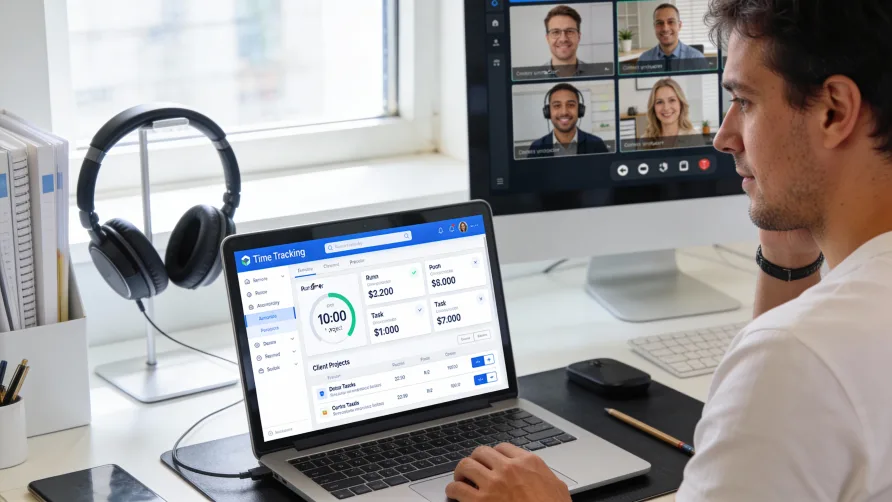
Virtual assistants operate in a fundamentally different context than traditional employees. They work remotely, often across time zones, frequently as contractors rather than employees, and typically without the direct oversight possible in an office setting. This distance creates legitimate questions about accountability while also raising concerns about micromanagement and trust.
Tracking virtual assistant hours serves practical purposes: ensuring you're paying for actual work performed, understanding how long tasks take, identifying bottlenecks in workflows, and providing documentation for tax purposes if the VA is a contractor. But how you approach time tracking affects your relationship with your VA and determines whether tracking becomes a useful tool or a source of friction.
Why Track Virtual Assistant Hours
The decision to track VA hours depends on your billing arrangement, trust level, and business needs. Not every VA relationship requires the same approach.
For hourly VAs, time tracking isn't optional—it's how you determine payment. Without accurate records, you're guessing at what you owe, and your VA is guessing at what to bill. Time tracking creates a shared understanding of hours worked and provides documentation if questions arise later.
For project-based or retainer VAs, time tracking serves different purposes. You're not paying by the hour, so tracking isn't about calculating payment. Instead, it helps you understand whether the agreed-upon fee reflects actual work required. If a project you expected to take 10 hours consistently takes 20, either your estimates are off or the scope needs adjustment. Time data informs better project pricing and workload planning.
For contractor classification purposes, time records provide documentation that supports your VA's status as an independent contractor rather than an employee. This matters in countries with strict worker classification rules where control over when and how work is performed can trigger employee reclassification.
Time tracking also reveals workflow inefficiencies. When a routine task takes much longer than expected, it might indicate unclear instructions, inadequate tools, missing information, or skills gaps requiring training. Without time data, these issues remain invisible until they cause larger problems.
The documentation created by time tracking protects both parties. If disputes arise about payment, deliverables, or scope, time records provide objective evidence about what work occurred when. This protection matters more with VAs you've never met in person and may be working with across international borders where legal recourse is complicated.
The Trust and Verification Balance
Virtual assistant relationships operate on trust in ways traditional employment doesn't. You're working with someone you may have never met, possibly in a different country, often without the ability to verify their work in real time. Time tracking enters this dynamic as either a trust-building mechanism or a trust-destroying intrusion depending on how it's implemented.
Heavy-handed monitoring—screenshot capture every few minutes, keystroke logging, website tracking, random camera checks—signals profound distrust. Most VAs react to this level of surveillance by either refusing the work entirely or delivering minimum effort while meeting the letter of tracking requirements. The monitoring creates adversarial relationships where VAs game the system rather than focusing on quality work.
Reasonable verification—timesheets showing when work occurred, project-based time allocation, periodic check-ins about progress—demonstrates that you want accountability without assuming dishonesty. This approach treats VAs as professionals responsible for managing their own work within agreed parameters.
The challenge is calibrating verification to match the relationship stage. When beginning with a new VA you found online and have no history with, more verification makes sense. As the working relationship develops and the VA proves reliable, backing off monitoring signals that trust is being earned. VAs who consistently deliver quality work on time resent being treated with the same suspicion as someone in the first week of working together.
Consider what you're actually trying to prevent. If your concern is a VA claiming hours they didn't work, simple timesheet review catches egregious padding. If you're worried they're working for someone else during your time, micromanagement won't fix that—clear deliverables and deadline accountability will. If you're concerned about work quality, time tracking won't reveal that—work product review will.
Frame time tracking as a business tool rather than a surveillance mechanism. When introducing time tracking, explain it as helping both parties understand workload, plan projects better, and ensure fair payment. This framing positions tracking as serving mutual interests rather than catching wrongdoing.
Time Zone and Schedule Considerations
Virtual assistants often work from different time zones, sometimes many hours ahead or behind your location. This asynchronous work arrangement affects how time tracking operates.
Flexible time tracking suits asynchronous work better than rigid schedules. Your VA might work when you're sleeping, splitting tasks across different time blocks when convenient for their location. Requiring VAs to work during your business hours wastes the asynchronicity advantage and may violate the independence expected of contractor relationships.
Time tracking tools should accommodate flexible schedules without requiring constant availability. Look for systems that let VAs start and stop timers as needed, log time manually after completing work, or submit timesheets covering their actual work periods rather than predefined shifts. The tracking should capture when work happened without dictating when it must happen.
Overlapping hours matter for real-time collaboration but shouldn't be enforced through time tracking. If you need two hours of overlap daily for meetings and communication, state that as a scheduling requirement separate from time tracking. The time tracking verifies the work occurred; the scheduling agreement ensures availability when needed.
Be aware that time stamps in tracking systems may display in your local time zone rather than your VA's. A timesheet showing work from 2am to 6am might look suspicious until you realize it's actually 2pm to 6pm in the VA's location. Good time tracking tools handle multiple time zones gracefully, but review settings to ensure you're interpreting times correctly.
Avoid using time tracking as a backdoor way to control when VAs work. If you're paying for results rather than hours, the time tracking is documentation and analysis, not schedule enforcement. This distinction matters for contractor classification and for maintaining a productive working relationship.
Time Tracking Tools That Work for Virtual Assistants
The right time tracking tool depends on your VA's work type, technical comfort level, and the level of verification you need. Not all tools work well for the virtual assistant context.
Simple timesheet tools like Clockify, Toggl Track, or Harvest let VAs log hours against projects or tasks. These tools focus on time tracking without adding employee scheduling, shift management, or other features irrelevant to contractor relationships. VAs can run timers while working or add time manually after the fact. The simplicity makes adoption easy even for VAs with limited technical skills.
The free tiers of these tools often provide everything needed for working with a small number of VAs. You can create projects, let VAs track time against them, review timesheets, and export data for billing or record-keeping. Paid features like invoicing, team management, and advanced reporting become relevant only if you're managing many VAs or need detailed analytics.
Project management tools with time tracking like Asana, ClickUp, or Monday integrate time logging with task management. VAs track time directly on tasks, creating a clear connection between hours logged and work completed. This integration helps you verify that time aligns with deliverables and provides context for time entries that standalone timesheets lack.
The downside is complexity—these platforms include extensive project management features that may be overkill if you just need time tracking. Implementation takes more effort than simple timesheet tools, and VAs need to learn the full platform rather than just a timer. This investment makes sense if you're already using the platform for project management and want to add time tracking, less sense if you're adopting it solely for tracking VA hours.
Screenshot and activity monitoring tools like Hubstaff or Time Doctor add productivity monitoring to time tracking. They capture screenshots at intervals, track which applications are used, monitor mouse and keyboard activity, and flag idle time. Some business owners swear by these tools for managing remote teams; many VAs refuse to work under such monitoring.
These tools work best for VAs performing repetitive tasks where productivity metrics are meaningful—data entry, transcription, customer support. They work poorly for creative or strategic work where thinking time looks like inactivity. The monitoring can catch VAs who grossly inflate hours, but it also creates constant pressure that reduces work quality and drives away skilled professionals who have other options.
If you use monitoring tools, be transparent about exactly what's being tracked. VAs should know screenshots are being captured, when tracking starts and stops, and what reports you'll review. Some tools let VAs blur or delete screenshots before submission, giving them control over privacy while still providing accountability.
Manual timesheets submitted via spreadsheet or email work for trusted VAs performing varied work that doesn't fit neat time blocks. The VA logs their hours with descriptions of work performed and submits the timesheet weekly or biweekly. You review for reasonableness and approve payment.
This approach requires the most trust and provides the least verification. It works when you have a strong working relationship, when work output is easily verifiable against hours claimed, or when the VA's rates are low enough that small inefficiencies don't justify monitoring overhead. Manual timesheets are vulnerable to estimation errors and unintentional padding but cost nothing to implement and require minimal technical skills.
Communication and Expectation Setting
Problems with VA time tracking usually stem from unclear expectations rather than dishonesty or technical failures. Explicit communication about how, what, and why you're tracking prevents most issues.
Define what constitutes billable time before the VA starts tracking. Is research time billable? What about communication via email or chat? Do you pay for time spent waiting for your feedback on deliverables? If the VA needs to redo work because requirements changed, who pays for that time? Address these questions upfront rather than arguing about timesheet entries later.
Some business owners pay only for "productive" time directly producing deliverables. Others pay for all time the VA spends on project-related activities including communication, research, and waiting. Neither approach is wrong, but the VA needs to know which rules apply. Changing the rules mid-project creates resentment and confusion.
Specify time tracking cadence and detail. Should the VA log time as they work or submit timesheets at the end of each day or week? Do you want time entries broken down by task or is total daily time sufficient? How detailed should task descriptions be?
More granular tracking provides better data but creates more overhead. If you're paying $15 per hour for administrative support, requiring entries every 15 minutes with detailed descriptions wastes money on tracking that could go toward productive work. Match tracking detail to the value of the information you're gathering.
Establish review and approval processes. How quickly will you review submitted time? Will the VA be paid for all hours submitted or do you reserve the right to adjust time entries? What happens if you think a task took longer than it should have—do you discuss it with the VA or just pay less?
VAs need to know whether time submission equals payment or begins a review process. If you're going to scrutinize every entry and frequently reduce hours, state that expectation clearly so the VA can decide whether to accept those terms. If you'll trust submitted time barring obvious errors, say that too so the VA isn't anxiously waiting to learn what they'll actually be paid.
Discuss time tracking tool requirements. If you require specific software, make that clear during hiring. Some VAs already use particular tools and prefer not to switch; others are flexible. If the required tool costs money, clarify who pays for it. Asking a VA to pay for monitoring software they wouldn't otherwise use is likely to be refused.
Let VAs know whether they need to track time while working or can log time retroactively. Real-time tracking using timers provides more accurate data but limits flexibility. Retroactive logging accommodates varied schedules but relies on memory and estimates. Each approach has trade-offs.
The Activity Monitoring Debate
Activity monitoring—screenshots, keystroke logging, application tracking, mouse movement measurement—provokes strong reactions. Business owners who use these tools describe them as accountability measures. VAs subjected to them often call them degrading and invasive.
The case for activity monitoring rests on preventing time theft. Screenshots prove VAs are working when they claim to be rather than watching Netflix while running a timer. Application tracking shows whether time was spent on work-related tasks or personal activities. Idle time detection prevents getting charged for hours when the VA stepped away from the computer.
These tools occasionally catch egregious fraud—VAs billing full days while barely working, or logging time for work obviously not performed. For business owners burned by dishonest VAs, monitoring provides peace of mind and documentation.
The case against activity monitoring argues it's demeaning, counterproductive, and incompatible with contractor relationships. Skilled professionals resent being treated like untrustworthy children. The monitoring creates stress that reduces work quality. Time spent managing screenshots and explaining idle time could be spent working. And controlling how and when contractors work raises employee classification concerns.
Activity monitoring changes the nature of the relationship. You're no longer buying deliverables from an independent professional; you're supervising a remote employee you don't trust. Many experienced VAs refuse to work under such conditions, narrowing your talent pool to those with fewer options.
If you decide activity monitoring is necessary, use it proportionally. Screenshots every 30 minutes provide verification without constant surveillance. Application tracking during work hours but not 24/7 monitoring respects boundaries. Idle time detection that flags long breaks rather than every bathroom trip is reasonable.
Consider whether deliverable-based accountability might serve better than activity monitoring. If you can evaluate work quality and completeness, you don't need to verify how every hour was spent. A VA who consistently delivers high-quality work on time might be working faster than another VA doing the same tasks—why would you want to pay more for slower work? Focus on outcomes rather than inputs.
Best Practices for Tracking VA Hours
Start with trust and add verification as needed rather than starting with heavy monitoring and backing off if trust develops. Beginning a relationship with aggressive monitoring poisons it from the start. Beginning with reasonable accountability and adding monitoring only if problems emerge respects the VA while protecting your interests.
Use time tracking primarily for understanding workload and improving processes rather than catching fraud. Review time data looking for patterns: which tasks take longer than expected, where VAs get stuck, what work could be batched or eliminated. This analytical approach gets value from tracking beyond just verifying hours.
Pay on time and without dispute when time entries are reasonable. VAs who submit fair timesheets and deliver quality work should receive payment promptly without questioning every entry. If time seems excessive for the work completed, address it as a communication and efficiency issue rather than an accusation of dishonesty.
Provide feedback about time tracking separate from feedback about work quality. If the VA isn't logging time with enough detail or is forgetting to submit timesheets, address that process issue directly. If work quality is poor, address that separately. Conflating time tracking compliance with work quality creates confusion about what actually needs to improve.
Respect that time tracking adds overhead to the VA's work. Every minute spent logging time, writing task descriptions, taking screenshots, or answering questions about time entries is a minute not spent on productive work. Factor this overhead into your cost calculations and avoid excessive tracking requirements that create more overhead than value.
Build in time for correction and discussion. VAs will occasionally log time incorrectly, forget to track something, or have questions about what to track. Handle these situations as normal corrections rather than violations requiring discipline. A collaborative approach to fixing time tracking issues maintains a positive relationship.
Review your time tracking requirements periodically. What you needed when starting with a new VA may be excessive once the relationship is established and trust is earned. Continuing aggressive monitoring after it's no longer necessary wastes everyone's time and damages the relationship. Be willing to back off verification as trust develops.
When Time Tracking Creates More Problems Than It Solves
Some situations call for abandoning hourly time tracking entirely rather than trying to make it work.
If you find yourself spending significant time reviewing timesheets, questioning entries, and arguing about what is or isn't billable, the tracking overhead may exceed the value it provides. Calculate what your time spent on time tracking costs at your own hourly rate—if it's more than you'd lose to occasional overbilling, eliminate the tracking and negotiate a project rate instead.
When work is creative, strategic, or variable, time tracking often fails to capture the value being created. A VA who solves a problem in 30 minutes after thinking about it for three days has created more value than one who spends three full days working through trial and error. Paying by the hour penalizes efficiency and expertise.
For trusted VAs doing ongoing work, retainer arrangements often work better than hourly tracking. Agree on a monthly fee for a certain scope of work and trust the VA to manage their time. The VA gets predictable income; you get predictable costs. Both sides avoid time tracking overhead.
Consider whether you're using time tracking to avoid having difficult conversations about work quality or productivity. If a VA consistently takes too long to complete tasks, the problem is their skill level or your instructions, not their time tracking accuracy. Address the underlying issue rather than using time tracking as a proxy for performance management.
Time tracking is a tool, not a solution. It works when it helps both parties understand workload, ensures fair payment, and provides useful data. It fails when it becomes a source of conflict, overhead, and distrust. Match your tracking approach to the relationship you want to build with your virtual assistant.