
Flexible Terms in a Contract-Heavy Industry
For a credit card processing company that's been operating since 2001, Flagship Merchant Services brings a notable combination of strengths and caveats to the table. We score Flagship 5.7 out of 10 for the credit card processing category. The month-to-month contract flexibility and quick setup are real advantages, but they're offset by a pricing model that requires you to call a sales representative for any rate information at all, and enough contract fine print that you'll want to read your merchant agreement thoroughly before committing.
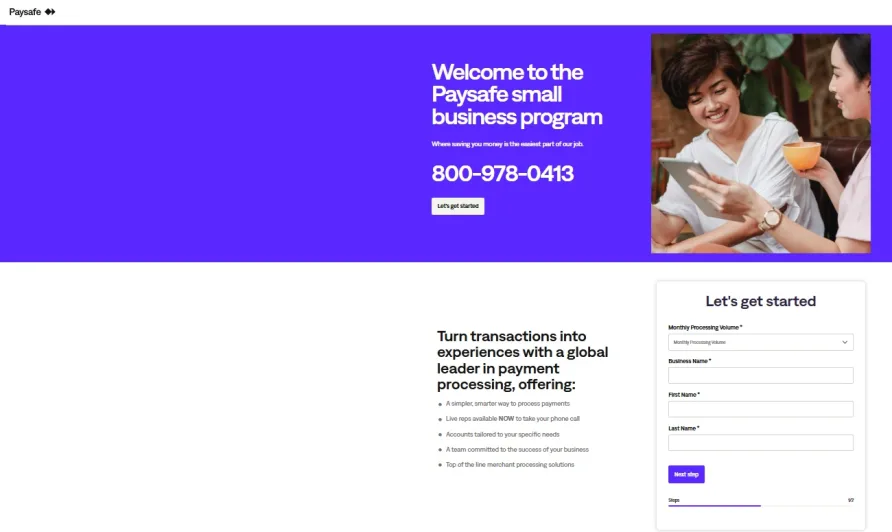
Flagship Merchant Services was founded in 2001 in Charlestown, Massachusetts, and built its early reputation as an independent sales organization (ISO) serving small and mid-size businesses. The company was acquired by iPayment in 2012, and iPayment was subsequently acquired by Paysafe Group in 2018. Paysafe, a multinational payments company publicly traded on the NYSE under the ticker PSFE, now operates Flagship as part of its North American small business division. Flagship claims to serve over 25,000 active merchant accounts. The company's website now redirects to Paysafe's small business landing page, a transition that signals the Flagship brand is being consolidated into the larger Paysafe identity.
What Flagship Brings to Your Payment Setup
Flagship covers the core processing channels most small businesses need. Retail merchants get access to the full Clover hardware lineup, including Clover Station for full-featured countertop POS, Clover Mini for smaller footprints, Clover Flex for handheld mobility, and Clover Go for smartphone-based card acceptance. All Clover devices support EMV chip cards, NFC contactless payments including Apple Pay and Google Pay, and traditional magnetic stripe transactions. If you sign a longer-term contract, Flagship includes a free credit card terminal as part of your account setup, and the company will also reprogram one existing terminal at no charge. Keep in mind that free equipment typically requires a commitment of at least 12 months to three years, which undercuts the month-to-month flexibility that Flagship promotes elsewhere. Purchasing your own equipment avoids that lock-in entirely, and Flagship's sales team can walk you through compatible hardware options during onboarding. The Clover hardware itself is owned by Fiserv, which means it's tied to the Fiserv processing network and may not transfer to a different processor if you switch later.
For card-not-present transactions, Flagship provides a virtual terminal that lets you manually key in credit card details for phone and mail orders. E-commerce merchants can connect through the Authorize.Net payment gateway or Flagship's own Quiq gateway service, both of which support shopping cart integration, recurring billing, and standard fraud prevention tools like Address Verification Service (AVS) and CVV2 verification.
Mobile processing is handled through iPayment's MobilePay app and card reader, available for iOS and Android. The app tracks cash and card transactions, manages tips and refunds, and includes a merchant portal for basic inventory and reporting functions. There's no upfront cost for the card reader itself, but a monthly service fee applies.
The iAccess Portal and Business Reporting
Every Flagship account includes access to iAccess 3.0, the company's cloud-based business management portal. The tool provides daily, weekly, and monthly processing summaries, digital statement access, chargeback tracking, and self-help resources including how-to videos and knowledge base articles. Flagship offers two tiers of iAccess: a Lite version with basic reporting and an Essentials version that adds deeper analytics and business insights. The Essentials tier includes a competitive benchmarking feature that compares your performance metrics against industry averages, which can be useful for identifying trends in your transaction data.
The portal's interface is functional but dated. Navigating between the reporting sections and the self-service support tools requires more clicks than it should, and the distinction between what's available in Lite versus Essentials isn't always clear from within the portal itself. iAccess covers the essentials well, but the overall experience feels utilitarian compared to more modern processing dashboards, and you should expect a short learning curve before daily reporting and reconciliation become routine.
Loyalty, Gift Cards, and Cash Advances
Beyond core processing, Flagship bundles several value-added services. The Pirq-powered digital loyalty program gives your customers a digital punch card system that tracks purchases and rewards repeat visits. You can segment customers by spending behavior and send targeted promotions. Gift card services let you create branded, reloadable cards with flexible redemption options and built-in reporting.
Flagship also offers merchant cash advances of up to $150,000, repaid through a percentage of your daily credit card sales. This can work as a fast financing option when you need working capital without the approval timeline of a traditional bank loan, though the total cost of a cash advance is typically higher than conventional lending.
Flagship's Pricing: What You'll Actually Pay
This is where the review gets complicated. Flagship publishes no pricing information on its website. None. No rate ranges, no sample fee schedules, no tier breakdowns. Getting any rate information at all requires calling a sales representative and completing a needs assessment for your business. The company's stated rationale is that custom pricing ensures you don't pay for services you don't need, and there's some truth to that. But the opacity also means you can't comparison shop without investing time in a sales conversation first.
Flagship typically offers new merchants tiered pricing as the default rate structure. Tiered pricing groups transactions into qualified, mid-qualified, and non-qualified categories, with the processor determining which tier each transaction falls into. This model tends to cost more than interchange-plus pricing because the tier assignments don't always reflect the actual interchange cost of a given card type. Interchange-plus pricing is available if you ask for it, but it isn't promoted and may require negotiation. In our evaluation, the interchange-plus markup Flagship applies can be substantial, so comparing the quoted rate against current interchange tables is important before signing. Monthly fees add on top of that. In reviewing the merchant agreement terms, we found a statement fee around $7.95 per month, a gateway fee near $10 per month for online processing, a monthly minimum of $15 (meaning if your processing fees don't reach $15 in a given month, you pay the difference), and an annual PCI compliance fee of $99. Merchants who don't complete their annual PCI compliance questionnaire face a non-compliance fee of $19.95 per month until they do.
Let's put annual numbers on this. A solo merchant on a basic plan would pay roughly $95.40 in statement fees, $120 in gateway fees, and $99 in PCI compliance annually, totaling around $314 in fixed costs before any per-transaction processing fees. A business processing $10,000 per month at an effective rate of 3.5% would pay approximately $4,200 per year in processing fees alone, bringing the annual total to roughly $4,514. For a team of five terminals, multiply the statement and equipment-related fees accordingly. That's before considering any add-on service charges that may appear on your statement.
One additional option: Flagship's cash discount program lets you build processing costs into your posted prices and offer a discount to customers who pay with cash. This can effectively reduce your processing costs to zero, but it shifts the cost burden to card-paying customers and requires compliant signage at your point of sale.
The Right Fit for Flagship
Picture a retail shop owner who's been burned by a long-term processing contract before. She wants month-to-month flexibility so she can switch providers without penalty if the relationship goes south. She processes moderate card volume, prefers Clover hardware for her countertop, and doesn't mind picking up the phone to negotiate her rates. Flagship fits that profile. The no-early-termination-fee structure is genuine, and the fast approval process means she could be processing cards within a day of signing up.
Now consider a restaurant owner expanding to a second location who needs to understand his processing costs down to the penny before committing. He wants to model the financial impact across both locations, compare rate structures side by side, and make a data-driven decision. Flagship's quote-only pricing makes that kind of advance planning difficult. He can't run the numbers until he's already deep into a sales conversation, and even then, the lack of a standardized rate card means his costs at location two could differ from location one depending on which rep he works with.
Where Flagship Falls Short on Transparency
The pricing opacity is Flagship's most significant limitation, and it extends beyond the headline processing rate. Because pricing is quote-based and the fee schedule can include multiple line items beyond what's discussed during the sales call, the only safe approach is to request the complete fee schedule in writing before signing and then reconcile your first two statements line by line against it. We found that the merchant agreement can include add-on services that carry their own monthly charges, with a 30-day opt-out window that isn't prominently communicated during onboarding. If add-on services exist in your agreement, confirm exactly what they are, whether they're optional, and how to opt out before the account goes live.
Account cancellation is technically fee-free, but the process requires written notice rather than a phone call. Treat cancellation like a compliance task: follow the required written-notice process exactly as described in your merchant agreement, keep confirmation receipts, and save all correspondence so you can verify the closure date against your final statement. A phone call alone isn't sufficient to close the account.
A Brand in Transition
The most significant recent development is Flagship's absorption into the Paysafe brand. The flagshipmerchantservices.com domain now redirects to Paysafe's small business landing page, which promotes Clover hardware, SwipeSimple mobile processing, and interchange-plus pricing under the Paysafe name. The iAccess portal and 24/7 support remain part of the offering, but the Flagship branding is effectively disappearing. If you're an existing Flagship merchant, confirm which entity issues your statements and who provides first-line support as the branding consolidates. For prospective merchants, you're increasingly signing up with Paysafe's small business program rather than Flagship as a distinct entity.
Our Verdict on Flagship Merchant Services
Flagship's month-to-month contract structure and fast setup process are real, practical advantages for small businesses that value flexibility over everything else. The Clover hardware access, iAccess portal, and bundled services like gift cards and loyalty programs round out a full-featured processing package. Those strengths are meaningful.
But the pricing model demands extra diligence on your part. You won't find rate information anywhere before talking to sales, the default tiered pricing tends to run higher than interchange-plus alternatives, and the contract fine print can include fees that don't surface until your first statement arrives. If you move forward with Flagship, request interchange-plus pricing explicitly, ask for the complete fee schedule in writing, read the full merchant agreement before signing, and confirm in writing how to properly close your account if needed. The service itself can work well for the right merchant, but it rewards preparation and punishes assumptions.