
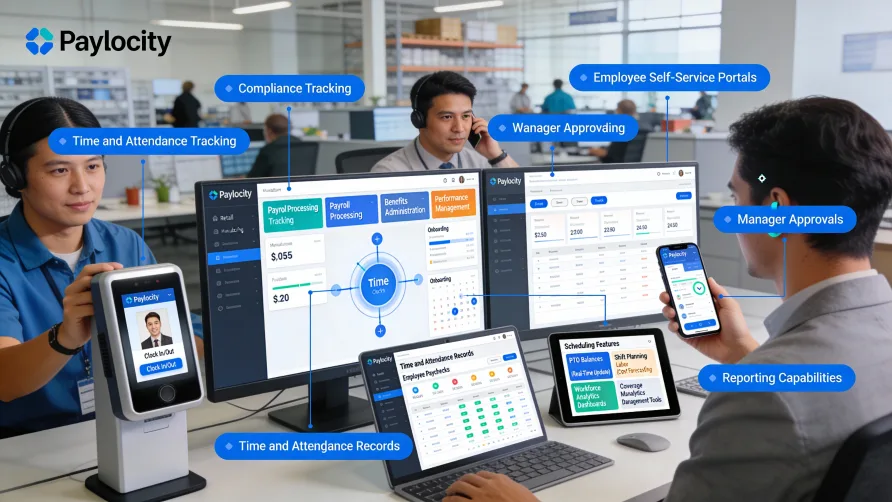
Yes, Paylocity includes time tracking and attendance management capabilities as part of its platform. The time and attendance functionality integrates with Paylocity's payroll system, allowing employee hours to flow directly into payroll processing without manual data transfer.
If you use Paylocity for payroll, the time tracking features work within the same platform where you manage other HR functions. This integration eliminates the need for separate time tracking software and the data synchronization challenges that come with using disconnected systems.
How Does Paylocity Time Tracking Work?
Paylocity time tracking captures employee work hours through multiple clock-in methods and consolidates that data into timesheets for manager review and approval. The system records when employees start and end their shifts, calculates total hours worked, and applies your configured pay rules before sending approved hours to payroll.
Employees clock in using web-based time clocks, mobile apps, or kiosk devices depending on your configuration and their work situation. Each clock-in records the employee's identity, timestamp, and any additional information like job codes or cost centers you require.
The platform tracks hours in real-time throughout each pay period. Managers can view current hours worked, see who's clocked in at any moment, and monitor employees approaching overtime thresholds. This visibility helps you make staffing adjustments before overtime becomes unavoidable.
Timesheet approval workflows route completed timesheets to designated approvers. Managers review hours, address any exceptions like missed punches or unscheduled absences, and approve timesheets for payroll processing. Once approved, the hours transfer automatically to the Paylocity payroll system.
The connection between time tracking and payroll means the hours you approve in timesheets are the hours payroll processes. You don't export files, import data, or manually enter totals into payroll. The integration reduces errors and speeds up payroll preparation.
Does Paylocity Have a Mobile Time Clock?
Yes, Paylocity provides mobile time tracking through its mobile app. Employees can clock in and out from their smartphones, which solves time tracking challenges for remote workers, field service teams, or anyone who works away from a fixed location.
The mobile time clock captures GPS coordinates at clock-in, recording where employees were when they started their shift. This location data helps verify that field employees are at assigned job sites and provides documentation of remote worker locations for compliance or client billing purposes.
Geofencing capabilities let you define approved clock-in locations. When enabled, employees can only clock in when their device is within specified geographic boundaries. This feature prevents early clock-ins from home and ensures workers are physically present at work sites before recording hours.
The mobile app includes additional workforce management features beyond basic time tracking. Employees can view their schedules, check time off balances, submit time off requests, and access their timesheet history. Push notifications alert them to upcoming shifts or schedule changes.
For businesses concerned about time theft or buddy punching with mobile clocks, the app can require photo verification at clock-in. Employees take a selfie as part of the clock-in process, adding identity confirmation to GPS location data.
Web-Based and Kiosk Time Clocks
Paylocity's web-based time clock lets employees record hours from any computer with internet access. Office workers or employees with computer access during their shifts can log into the Paylocity portal and clock in through their browser.
The web clock provides the same core functionality as other clock-in methods while offering flexibility for employees who work at computers. They can clock in when they arrive, clock out for breaks, and clock out at day's end without leaving their workstation.
Kiosk mode converts tablets or dedicated terminals into shared time clocks for employee use. This option works well for businesses where employees don't have individual devices or where you want centralized clocking locations near facility entrances or in break rooms.
Kiosks support multiple identification methods including PIN codes, badge swipes, or biometric verification. Biometric options like fingerprint or facial recognition prevent buddy punching by confirming employee identity before allowing clock-in.
The kiosk can be configured to capture additional information at clock-in. You might require employees to select which department they're working in, confirm meal break attestations, or acknowledge safety reminders before their shift begins. This data attaches to the time entry for reporting and compliance purposes.
Integration With Paylocity Payroll
The integration between Paylocity time tracking and payroll provides significant efficiency gains compared to using separate systems. Approved timesheets flow directly into payroll processing, applying all your configured pay rules during calculation.
Employee data exists in a single system shared by time tracking and payroll. When you hire someone and add them to payroll, they automatically gain time tracking access with their pay rates, job classifications, and employment details already configured. You don't maintain duplicate employee records.
Pay calculations use the hours recorded in approved timesheets. Regular hours, overtime, shift differentials, and different pay rates for different work types all flow from time tracking into payroll automatically. The system applies federal and state overtime regulations based on employee classifications and your business location.
For businesses tracking labor costs at a detailed level, time entries can include cost allocation information. Employees can select which department, project, or client their hours apply to when clocking in. This cost data flows through to payroll and helps with job costing, project profitability analysis, or departmental budget tracking.
Time and Attendance Features
Paylocity's time and attendance module includes scheduling tools that let managers create and publish work schedules. Employees view their schedules through the mobile app or web portal, and the system can send automatic shift reminders to reduce missed shifts and late arrivals.
Attendance tracking monitors patterns including tardiness, early departures, and unscheduled absences. The system flags attendance issues automatically based on rules you define, helping managers identify chronic problems before they impact operations.
Time off management handles vacation, sick leave, and custom absence types you configure. Employees submit time off requests through the system, managers approve or deny requests based on scheduling needs and policy limits, and approved time off reduces available balances. Accrual calculations happen automatically according to your defined policies.
The platform enforces labor rules and compliance requirements. You can configure meal break requirements, rest period mandates, or consecutive hours limits. The system tracks these parameters and alerts managers when violations occur or are about to occur.
Exception management highlights issues that need resolution before payroll runs. Missed clock-outs, gaps in timesheets, or hours that fall outside scheduled shifts appear as exceptions requiring manager attention. Resolving these exceptions during the approval process prevents payroll errors.
Overtime Management
Overtime tracking in Paylocity monitors hours against the thresholds you configure. The system can calculate overtime based on daily hours, weekly totals, or consecutive days worked depending on your business requirements and applicable labor laws.
Managers receive alerts when employees approach overtime thresholds. These proactive notifications let you make scheduling adjustments before overtime becomes unavoidable, helping control labor costs while maintaining necessary staffing levels.
The system handles complex overtime scenarios including different rates for different overtime tiers, varied overtime rules by state or employee classification, and specialized calculations for industries with unique overtime requirements.
For businesses with union contracts or collective bargaining agreements, Paylocity can enforce specific overtime provisions. You can configure overtime rules that match agreement terms including premium rates, minimum rest periods, or caps on consecutive hours worked.
Reporting and Analytics
Paylocity includes reporting capabilities that help you analyze workforce data and labor costs. Standard reports cover common needs like hours by employee, department labor summaries, overtime analysis, and attendance patterns. These reports can run for specific pay periods or custom date ranges.
Real-time dashboards show current workforce status including who's clocked in, hours worked so far this pay period, and employees who haven't clocked in for scheduled shifts. This immediate visibility supports operational decisions throughout the workday.
Labor cost reporting breaks down expenses by dimensions you choose including department, location, project, or job code. These insights help with budget management, cost control initiatives, and understanding where labor expenses concentrate across your organization.
Custom reporting tools let you build analyses specific to your business needs. If you track unique metrics, need specialized compliance reports, or want to compare actual hours against scheduled hours, custom reporting can surface this information.
Implementation Considerations
Implementing Paylocity time tracking involves configuring the system to match your business rules, pay policies, and operational requirements. You'll work with Paylocity to set up overtime rules, approval workflows, time clock access methods, and any integrations with existing scheduling or workforce management tools.
Configuration includes defining job codes, cost centers, departments, or other labor allocation categories if you track time at a detailed level. The system needs to know which options employees can select when clocking in and how to categorize those hours for payroll and reporting.
Employee setup assigns time clock permissions, configures individual pay rules and overtime calculations, and establishes schedule parameters if you use scheduling features. For existing Paylocity payroll clients, employee data typically carries over to time tracking automatically.
Training requirements differ by role. Employees need instruction on clocking in and out, viewing schedules, and requesting time off. Managers require more comprehensive training covering timesheet approval, exception handling, reporting, and schedule management. Paylocity provides training resources to support implementation and ongoing use.
Time clock hardware needs physical installation if you're deploying kiosk tablets or dedicated terminals. This includes mounting devices, configuring network connectivity, setting up identification hardware like badge readers, and testing clock-in functionality before going live.
Getting Started
If you currently use Paylocity for payroll and want to add time tracking, contact Paylocity to discuss implementation. They can explain the setup process, configuration options, and timeline for adding time and attendance to your existing services.
For businesses implementing Paylocity for the first time, time tracking typically deploys alongside payroll setup. This coordinated implementation ensures your time tracking configuration aligns with payroll processing requirements from the start.
Consider your time clock needs before implementation. Understanding whether employees need mobile access, web clocks, physical kiosks, or multiple options helps ensure you configure the right clock-in methods for your workforce and work environments.
Plan timesheet approval workflows and deadlines around your payroll calendar. Most businesses establish approval deadlines that allow managers time to review and correct timesheets before payroll processing begins, preventing delays caused by unresolved exceptions or missing approvals.